Aging, Sleep, and Health: How Epithalon Peptide May Help Reset Your Body
Dr. Matthew Lewis
Epithalon, Peptides, Anti-Aging

Peptides and longevity tend to go hand in hand, and when it comes to the Epithalon peptide, it's been shown that it may help slow down aging and benefit your overall health. It’s our belief at Provoke Health that our patients should understand the science behind their treatment. When it comes to introducing the Epithalon peptide, we like to explain why it’s prescribed, how it works in the body, and the benefits it can provide.
What Is Epithalon?
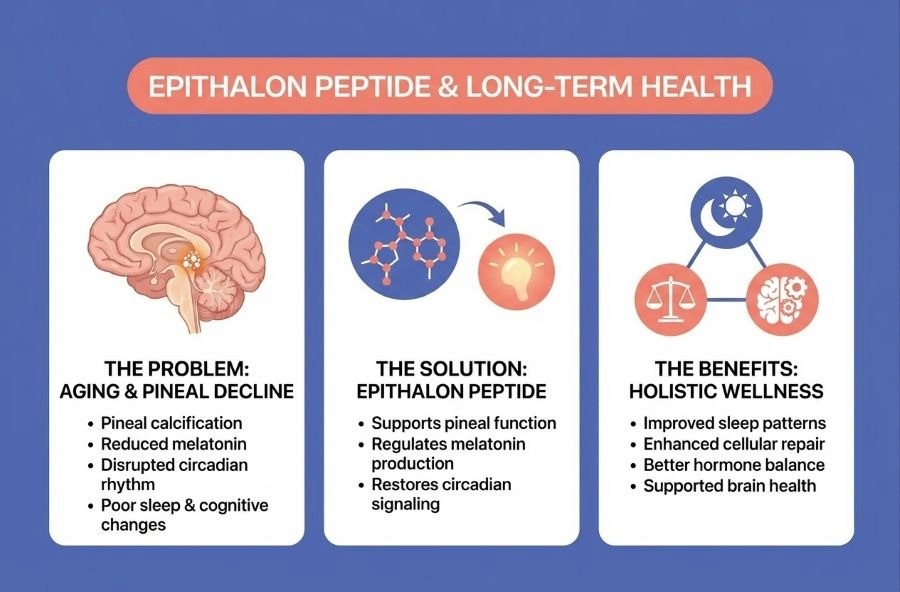
Epithalon (also called epitalon) is a synthetic peptide made up of four amino acids. It is designed to copy Epithalamin which is a naturally occurring peptide produced by your pineal gland. This is the small endocrine gland in the brain responsible for regulating melatonin and circadian rhythm (your sleep wake cycle).
Why Do We Treat with Epithalon?
The most important thing for patients to understand is how the Epithalon peptide can play in a patient’s long term health. Its major effect on the pineal gland is its main appeal. The Epithalon peptide may help support and restore the function of the pineal gland which produces melatonin. Melatonin is a hormone that controls your circadian rhythm that acts as your body’s internal clock which regulates when you sleep and wake.
If the pineal gland is working properly there are many important processes in the body that will stay balanced:
Melatonin is released at the right time which helps you fall asleep at night and wake up in the morning
Your sleep-wake cycle stays consistent which makes it easier to maintain healthy sleep patterns
Hormones stay balanced as many hormones follow your body’s daily rhythm
Your body gets deeper and more restorative sleep, which is when the body repairs itself
Memory and focus improves because the brain processes and stores information during sleep
Your immune system works better which helps the body fight illness
Cells repair and recover more efficiently which helps support healthy aging
Why Epithalon Is Used to Support Healthy Aging
One of the reasons the Epithalon peptide has gained the attention of functional medicine practitioners is that it’s designed to support the function of the pineal gland.
As we get older, the pineal gland becomes less active. One of the main reasons for this decline is calcification. Calcification happens when calcium deposits slowly build up in the gland over time. This calcification interferes with melatonin production and disrupts the body’s circadian rhythm, which causes lighter sleep, waking up during the night, reduced recovery, and changes in memory and cognitive performance.
The pineal gland also communicates with other important brain structures, including the hypothalamus and hippocampus. These areas are involved in hormone regulation, memory formation, learning, and emotional balance. Because of these connections, changes in pineal gland function can affect both sleep quality and overall brain health.
Epithalon is usually used in cycles rather than taken continuously. At our functional medicine practice, we usually begin recommending it to patients around their mid-40s. However, it can be used earlier depending on individual health needs. Between the ages of 45 and 50, it is recommended twice per year. After age 50, some people increase to three or four cycles per year. Each cycle typically lasts about 10–20 days, depending on the prescribed dose.
What Research Shows About The Epithalon Peptide
Most research has been conducted in animal models and alongside several human studies. The long-term research out of Russia involving more than 200 elderly individuals shows:
Cancer Research
Cancer prevention has been one of the most studied applications of Epithalon. In animal models, it reduced tumor formation in the colon and small intestine, decreased the number of animals developing malignant tumors, and helped prevent metastasis, particularly in reproductive organ cancers. The strongest protective effects were seen when treatment was sustained over time.
Retinal & Vision Health
Epithalon has shown significant impact in degenerative eye conditions. In hereditary retinal degeneration models, it preserved retinal structure and improved bioelectric activity. In clinical use for patients with degenerative retinal lesions, positive outcomes were reported in approximately 90% of cases.
It has also demonstrated potential in diabetic retinal damage by reducing oxidative stress and improving impaired healing in retinal cells exposed to high glucose.
Metabolic & Endocrine Health
In animal studies, Epithalon improved blood sugar and insulin sensitivity. This means Epithalon has similar impacts as a GLP-1 with additional benefits. Epithalon increased melatonin production at night and at the same time lowered baseline glucose and insulin levels, translating to improved metabolism and restful sleep.
Neurodegenerative Conditions
Peptides like Epithalon stimulate the Pineal gland which influences melatonin pathways. The pineal gland and melatonin pathways are important modulators of neurodegenerative disorders including Alzheimer's disease, Parkinson's disease, and multiple sclerosis. Stimulation of the melatonin pathway is known to provide antioxidant and anti-inflammatory benefits, resulting in immune modulation that aligns with decreasing brain inflammation, which is a major contributor to neurodegenerative disorders. The benefits of using Epithalon may be to prevent neurocognitive dysfunction and improve cognition and brain health.
Longevity & Human Aging Studies
One of the most exciting areas of research originated from a long-term Russian human study that included over 200 elderly individuals. This study followed participants for years and demonstrated:
• Reduced overall mortality rates
• Decreased incidence of age-related chronic diseases
• Improvements in cardiovascular, immune, endocrine, and nervous system function
Participants receiving Epithalon showed significantly higher survival rates compared to control groups, along with measurable improvements in markers of healthy aging.
Integrating The Epithalon Peptide Into Personalized Care
Epithalon is being studied for its role in cellular protection, oxidative stress reduction, metabolic balance, and longevity signaling. The research spans cancer biology, vision health, metabolic regulation, neuroprotection, fertility, and lifespan extension.
At Provoke Health, we focus on therapies designed to support long-term vitality at the cellular level. If you’re interested in learning whether Epithalon fits into your longevity or performance strategy, our team is here to guide you. You can schedule a free 15-minute consultation to discuss how to add this into your wellness protocol.
Disclaimer: The information in this blog post about the Epithalon peptide and treatment, is provided for general informational purposes only and may not reflect current medical thinking or practices. No information contained in this article should be construed as medical advice from Dr. Matthew Lewis, Functional Healthcare Group, PLLC, or PROVOKE Health, nor is this article intended to be a substitute for medical counsel on any subject matter. No reader of this blog post should act or refrain from acting on the basis of any information included in, or accessible through, this blog post without seeking the appropriate medical advice on the particular facts and circumstances at issue from a licensed medical professional in the recipient’s state, country or other appropriate licensing jurisdiction.
--------
About the Author: Dr. Matt Lewis, D.C., DACBN, CFMP® specializes in diagnosing and treating the underlying causes of the symptoms related to chronic and unexplained illness through nutrition, lifestyle, chiropractic, and other natural approaches to whole-health healing at PROVOKE Health in Tampa, Fla. Dr. Lewis has 20 years of experience practicing nutritional and holistic medicine. He earned his B.S. in Biology from Shenandoah University, his Doctorate in Chiropractic from Life University, his Diplomate status in Clinical Nutrition from the American Clinical Board of Nutrition, his CFMP from Functional Medicine University, and his certification as a Digestive Health Specialist (DHS) through the Food Enzyme Institute. Dr. Lewis’ passion for health and wellness stems from his own personal experience. With a family history of autoimmune conditions and diabetes, and his own lab tests showing his genetic susceptibility to Hashimoto’s thyroiditis (autoimmune thyroid), Dr. Lewis has learned how to restore his own health and vigor to prevent the onset of these and other illnesses and live an incredibly active life. Through this process, he acquired a deeper understanding of health and wellness, which he now offers his patients in Tampa and elsewhere.